
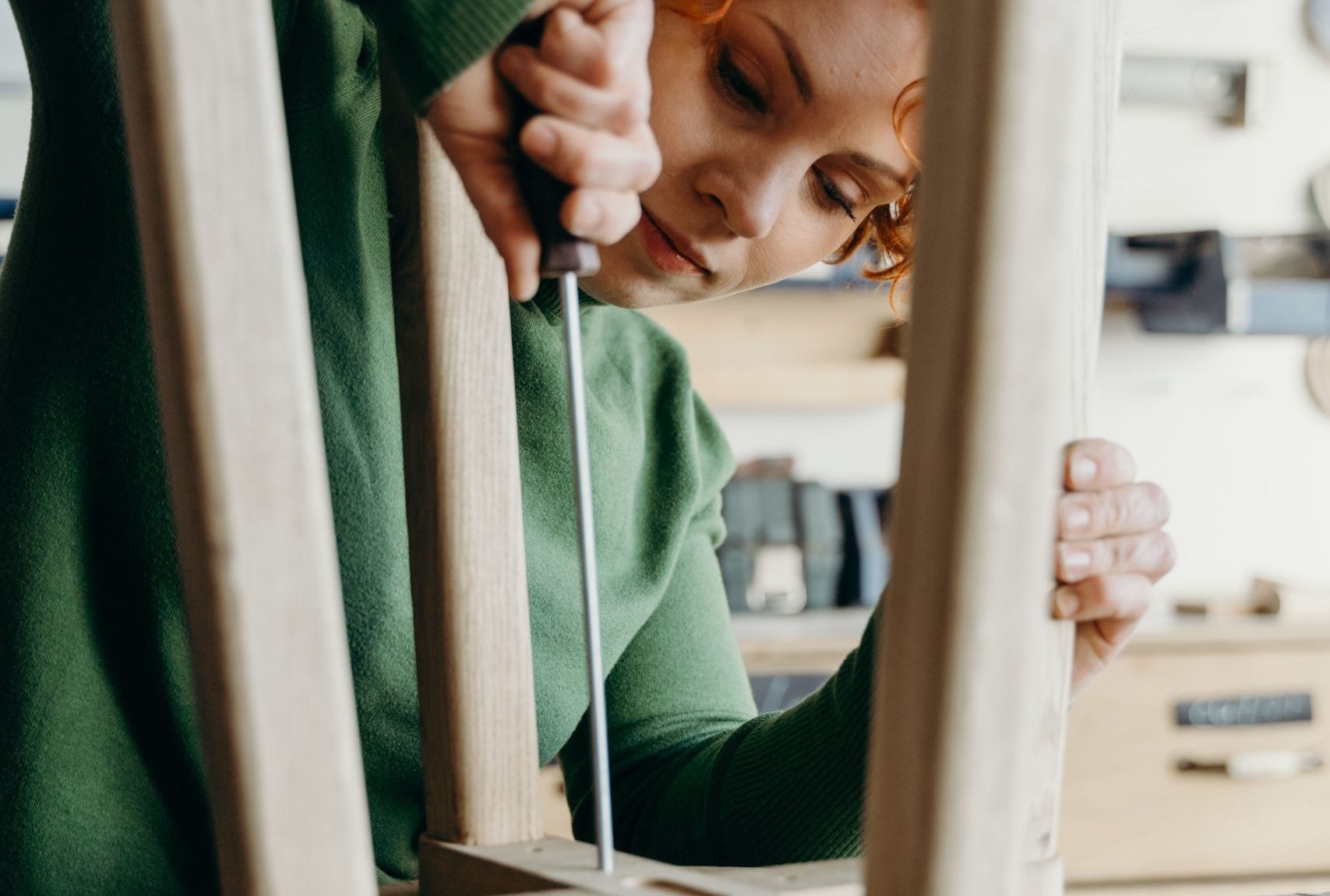
A chair looks simple when it is finished: a seat, a back and four legs. But it is one of the most demanding pieces of furniture to design well because it must support a moving body while remaining stable and comfortable.
The craft of chair making brings together structure, proportion, material selection and careful assembly. Each component has a job, and the connections between them are just as important as the parts themselves.
Design around the body
Seat height, depth, back angle and the position of the front edge all influence comfort. A dining chair needs to work with a table and allow the sitter to move naturally. A lounge chair may use a lower seat and a more reclined back. There is no single ideal dimension for every purpose.
Comfort should be tested in use, not judged from appearance alone. The chair should feel balanced when someone sits down, leans back or shifts position.
Choose appropriate timber
Chair components experience different forces. Legs and rails need strength and stable grain orientation. Curved backs and shaped arms may require timber that can be bent or carefully formed. The maker considers defects, moisture content and the direction of the fibres before cutting.
Make strong connections
Joinery transfers loads between the seat, legs and rails. Mortise-and-tenon joints are common in traditional chair construction because they provide substantial contact area. Dowels, screws and engineered connectors can also work when properly designed and executed.
Precision matters. Poorly fitted joints can loosen with repeated movement. Glue selection, clamping pressure and curing time all affect the strength of the assembly.
Shape and refine by hand
Edges are eased where hands and legs make contact. The seat may be shaped to support the body, and the back can be curved to provide support without feeling rigid. Sanding should remove tool marks while preserving the intended lines and transitions.
Finish for everyday use
The finish protects the timber and influences how the chair feels to touch. It should suit the environment and the expected wear. A dining chair may need a surface that is easy to wipe clean, while a decorative occasional chair may prioritise a particular tactile quality.
Inspect the finished chair
Check for wobble, uneven feet, rough edges, visible glue residue and inconsistent finish. Sit in the chair and move naturally. Listen for unusual creaks and notice whether the structure feels secure. A well-built chair should feel stable without needing the user to think about its construction.
Good chair making is a conversation between the body and the material. When design, joinery and finishing work together, the result feels effortless — a small piece of engineering that quietly supports daily life.
Thoughtfully designed. Naturally timeless.